
At this point I think most of us are exhausted.
Not regular tired. Not “I need a nap” tired.
Existentially tired.
Tired of the constant political chaos. Tired of headlines that sound like satire but somehow aren’t. Tired of waking up every morning to find out another politician has said something insane, another media outlet is pretending to be shocked for clicks, and another group of people online is threatening to cut ties with their entire family over a meme.
And maybe the most exhausting part is that most of us don’t even know what’s true anymore.
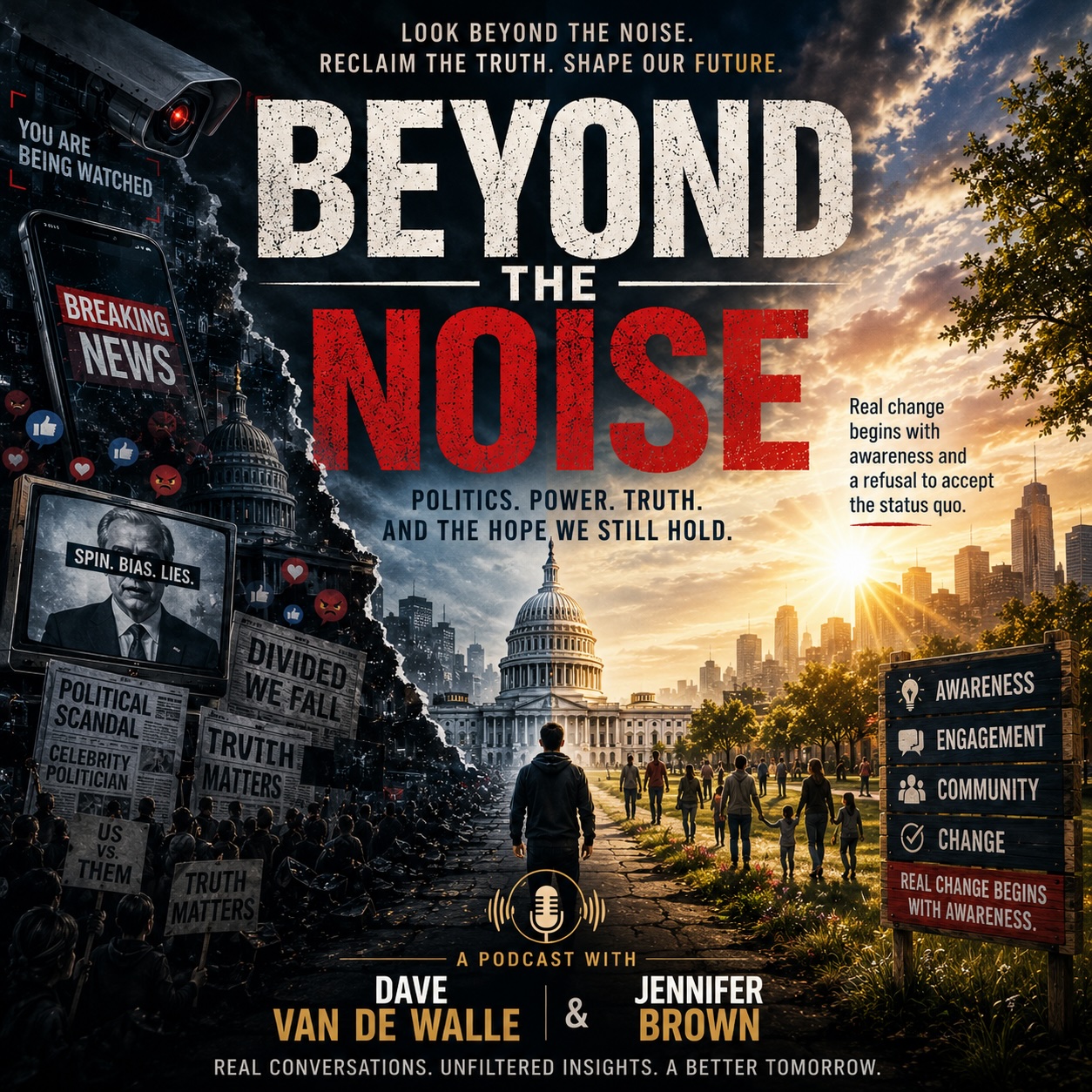
That’s what made my recent conversation with Dave Van De Walle so interesting.
We weren’t trying to solve politics. Nobody needs another podcast where two people scream talking points at each other while pretending they’ve cracked the code to society. We were talking about something deeper than that.
How did we get here?
Because whether you lean left, right, independent, exhausted suburban mom, or “please stop talking to me about politics at brunch,” it feels like something fundamentally changed over the last decade.
And it did.
The internet didn’t just change how we communicate. It changed how we think.
There was a time when politicians still had room to be human because there was space between public life and private life. A scandal might surface weeks later through a newspaper investigation instead of being clipped, memed, weaponized, and livestreamed in real time by millions of people with ring lights and WiFi.
Now every moment is content.
Every opinion is performative.
Every bad haircut becomes a national emergency for 36 hours.
We’ve created a society where everyone is simultaneously broadcasting and surveilling each other, and then we wonder why everybody seems anxious and fake.
Privacy isn’t really privacy anymore. It’s just the temporary absence of exposure.
And politics adapted to that environment faster than the rest of us did.
Modern politicians aren’t just politicians now. They’re brands. Influencers. Content creators. Rage farmers. Celebrity hybrids engineered for virality instead of leadership.
Which explains why actual governance increasingly feels secondary to whatever clip is trending on social media.
Meanwhile the average person is sitting at home wondering why they feel disconnected, angry, overwhelmed, and weirdly hopeless all the time.
Because outrage is profitable.
Fear is profitable.
Confusion is profitable.
Keeping people emotionally exhausted is one of the easiest ways to stop them from thinking critically.
The irony is that most Americans probably agree on more than social media would have us believe. Most people want safe neighborhoods, affordable groceries, decent schools, functioning roads, and enough money left at the end of the month to enjoy their lives a little.
Revolutionary stuff.
But algorithms don’t reward calm, reasonable people who say, “I think there are probably nuances on both sides.”
Algorithms reward emotional reactions.
The louder, crazier, and more divisive something is, the further it spreads.
Which means many people are now consuming politics the same way previous generations consumed reality television. Not because it improves their lives, but because it keeps them emotionally stimulated.
And once you notice that, you can’t unsee it.
One of the things Dave and I discussed was how this constant cycle creates paralysis. People feel powerless because the problems seem too massive, too corrupt, too entrenched to fix.
So they disengage entirely.
But disengagement comes with consequences too.
Communities decay when people stop participating in them. Neighborhoods change when nobody feels responsible for them anymore. Institutions weaken when everybody assumes someone else will handle it.
The truth is, democracy was always supposed to require participation from imperfect, frustrated, skeptical people.
Not blind loyalty.
Not worship.
Participation.
That doesn’t mean spending all day screaming online. Honestly, that might be part of the problem.
It means paying attention. Staying grounded. Talking to people in real life. Refusing to let every issue become tribal warfare. Being willing to admit when something feels manipulative instead of instantly picking a team and defending it like your life depends on it.
Most importantly, it means refusing to surrender your ability to think clearly.
That’s becoming rare.
The good news is I don’t actually think people are as divided as the internet makes them appear. I think most people are quietly exhausted by the performance. They want honesty. They want sanity. They want conversations that sound like actual human beings instead of campaign interns fighting in a YouTube comment section.
Which is why conversations like this matter.
Not because Dave and I have all the answers. We don’t.
But because sometimes the first step toward clarity is simply recognizing the noise for what it is.
And once you do that, you stop feeling quite so powerless.
You start realizing that awareness itself matters.
That refusing to be manipulated matters.
That staying engaged without becoming consumed matters.
And maybe that’s where hope actually lives now. Not in perfect politicians or magical solutions, but in ordinary people deciding they’re done confusing chaos with truth.
The circus may still be running, but that doesn’t mean you have to buy a ticket.


Leave A Comment